
Ottawa County 72-Hour Release Gap
No distinct Ottawa County, Ohio 72-hour release URL was found in the Sheriff’s official materials. The Corrections Division page links to JailTracker, but does not describe a rolling three-day release view. It gives no official refresh cycle and no promise about how long departed names remain visible. The same limits apply when a live screen appears to offer more detail at a given moment.
The best lead route is an existing-record request. Identify a precise beginning and ending timestamp spanning the three days of interest. Ask for jail-register discharge entries within that range and related release sheets if they exist. This wording helps the Sheriff locate records it already keeps. It does not ask the office to design a new list or calculate a custom report.
Request Ottawa County 72-Hour Releases
A three-day records window needs firm boundaries. “The last 72 hours” changes each minute and may be read in more than one way. State both endpoints, the local time zone, and the record type. The Sheriff’s public-records page identifies the request channel. Ohio’s public-record rule calls for production within a reasonable period, not a universal same-day deadline.
- Choose an exact start and end date and time. State that the range covers discharge events from both Ottawa County Sheriff jail facilities.
- Ask for existing jail-register entries showing name, date and cause of commitment, and date and manner of discharge in that range.
- Request linked booking and release sheets when needed. Ask for an electronic copy and an advance cost estimate.
- Compare each entry with the correct Ottawa court docket to identify bond, dismissal, sentence completion, or another court action.
- Follow any transfer in the receiving system. Do not count continued custody as a community release.
The Ottawa County 24-Hour Releases route fits a same-day check. For a search centered on one person, including older events and other custody systems, use the Ottawa County released-inmate search.
Note: A clear date range helps locate existing records, but the office does not have to create a custom rolling report.
Ottawa County 72-Hour Release Fields
The requested record can supply a useful three-day inventory without pretending an online feed exists. ORC 341.06 sets the core jail-register fields. Extra booking and release details depend on the Sheriff’s actual records and lawful redaction. Ask for the fields that resolve identity, timing, and destination.
| Field | Use in a three-day review |
|---|---|
| Name and booking identifier | Separates people with similar names and ties records to one booking. |
| Commitment date and cause | Shows when the county custody episode began and its stated basis. |
| Discharge date and time | Tests whether departure falls within the exact 72-hour boundaries. |
| Manner of discharge | Separates community exits from transfers or other custodial changes. |
| Court and case number | Directs the reviewer to the order or docket event behind departure. |
| Receiving authority | Identifies another county, ODRC, federal, or immigration custody when recorded. |
The Sheriff’s retention schedule, not the public JailTracker screen, determines how long the underlying records remain. Ottawa Sheriff Policy 803 assigns a Custodian of Records and calls for a current schedule. The reviewed sources do not establish a fixed Ottawa retention period for release sheets or booking photos, so request the current approved schedule entries if age matters.
Ottawa County Weekend Release Window
A 72-hour range is useful because it can span several business and court days. It can also bridge a weekend or holiday. Yet the wider range does not fix source lag or make a current roster historical. A court may enter an order before jail processing finishes, and the public custody display may change after the person physically departs. The actual discharge time controls whether an event belongs in the chosen window.
Set endpoints that match the question. A Friday-through-Monday inquiry should name the actual dates and times, not merely say “over the weekend.” If a release appears just outside the range, compare the court order time with the jail discharge time. The two can differ without either record being wrong. Ask the Jail Desk about current custody, but use the written release entry for the durable time marker.
Ottawa County publishes no standard daily release-processing time, exit door, or family waiting point. Do not infer one. Anyone coordinating pickup should first confirm logistics with the Jail Desk. A broad three-day range helps find the record, but it cannot predict when pending release work will finish.
Avoid Wrong Ottawa County Release Rosters
The official local portal is the Ohio JailTracker instance ending in Ottawa_County_OH. General searches often produce Ottawa County, Michigan’s “miOttawa” roster instead. Both can appear credible. Only the Ohio portal linked by the Ottawa County Sheriff applies to Port Clinton and the two local Sheriff facilities.
Check the jurisdiction before recording a name or date. A Michigan result does not fill any part of an Ohio 72-hour release window. The wrong portal can also create false beliefs about available filters, photographs, history, or retention. Use the exact Ottawa County, Ohio JailTracker, then rely on the Ohio discharge record for the historical three-day view.
Note: The correct portal includes “OH” in its address; save the URL and the time of each live portal check.
Ottawa County Release App Caveat
The Sheriff maintains an official mobile app on both major stores. The Google listing refers to public inmate views, while the Sheriff app page supplies the download links. That supports checking a current inmate view. It does not support calling the app a 72-hour release feed, since no reviewed source promises a rolling release list, discharge alert, or post-release retention period.
The official Apple listing confirms the corresponding Ottawa County Sheriff app channel.
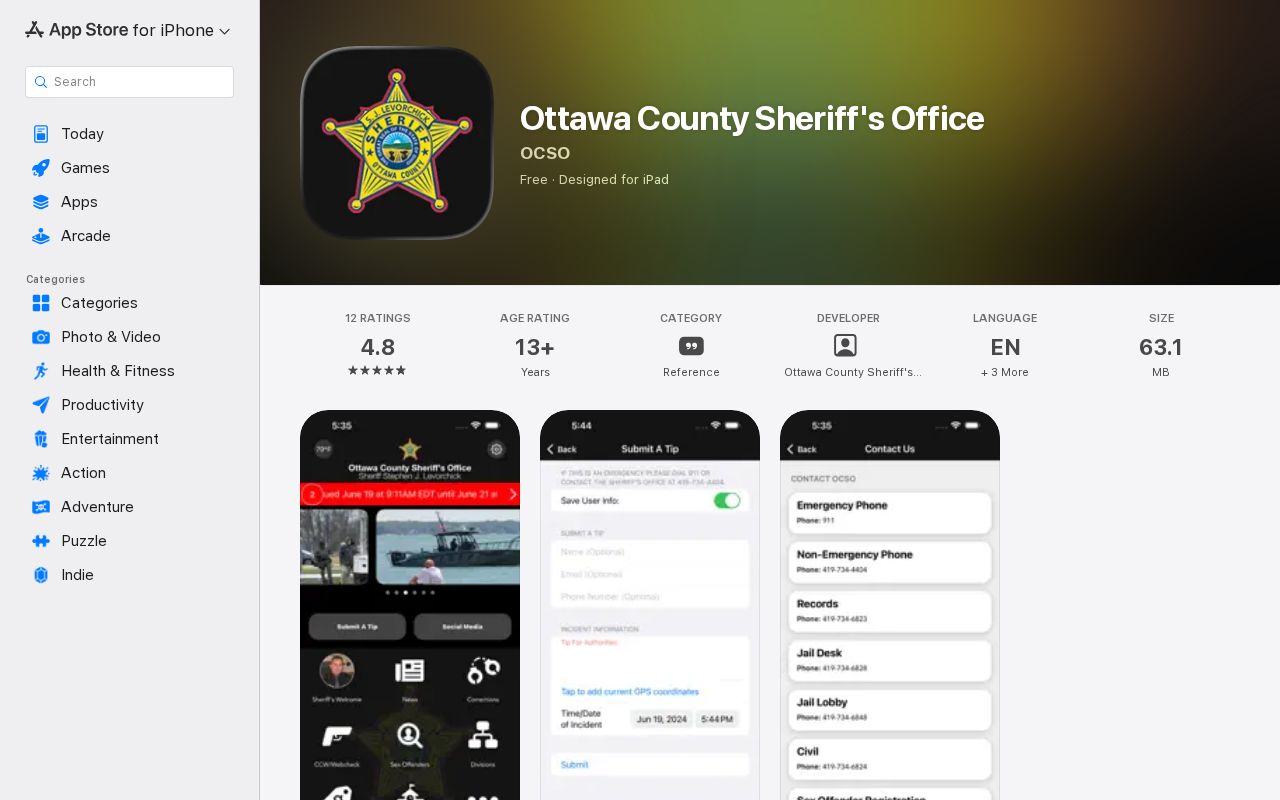
The image documents app availability only. It does not show an official three-day release screen. ICS Mobile, which appears in the Corrections material, serves inmate communications and video visits rather than recent-release reporting.
Verify Ottawa County Three-Day Releases
Each event in a three-day set should be matched to its proper source. Start with the Sheriff register for county-jail departure. Add the court docket to understand the legal act. If VINE reported an event, use it as a notice and compare it with the official record. VINE can report both releases and transfers, so the event label matters.
| Possible event | How to confirm it |
|---|---|
| Bond or recognizance release | Sheriff discharge entry plus the bond order in the relevant court docket |
| Sentence completed or time served | Release sheet and sentencing docket, including jail-time credit when shown |
| Transfer between Ottawa jails | Jail Desk and facility record; this remains county custody |
| Transfer to ODRC | ODRC Offender Search after state admission, using Ottawa as county of commitment |
| Transfer to another authority | Receiving county, BOP, USMS, or ICE system as the facts require |
Work release is also still custody. The Ottawa Municipal Court program can permit set hours outside the jail, but that does not make each daily departure an inmate release. The final Sheriff discharge entry and court record establish when the custodial term truly ends.
Ottawa County Release Records Outlast Rosters
A live roster answers a narrow present-tense question. A jail register answers what happened at discharge. That difference grows more important across a multi-day window because names can disappear from public view while the records office still holds the source documents. A missing record on the screen does not erase the commitment or discharge event.
Court records add context but are not a minute-by-minute exit log. Ottawa Municipal Court may contain a felony’s early probable-cause or bind-over stage, while Common Pleas contains the later serious felony case. An apparent end in Municipal Court can mean the matter moved to Common Pleas. Search both when the discharge record points to a felony case.
For a county detainee who never entered state custody, ODRC may have no person record. For an Ottawa County sentence that led to state prison, ODRC is the correct next system. The Released and APA Supervision statuses concern ODRC records, not a general archive of everyone who left the Ottawa jails. Match the system to the custodian.
Note: Confirm important details with the Sheriff, court, or receiving agency that created the record rather than relying on screen absence.